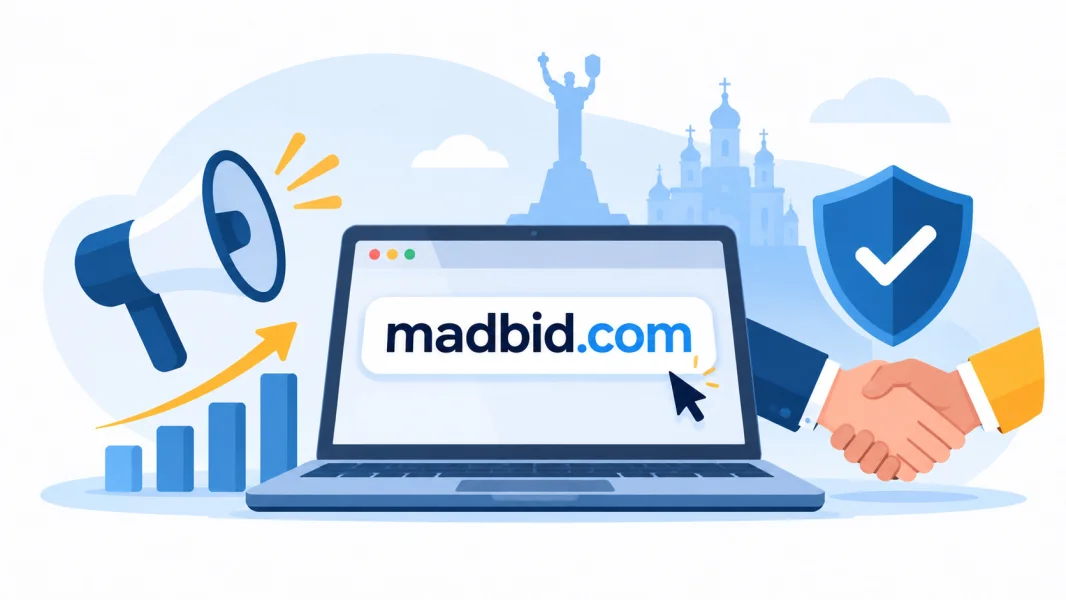
The Problem of Ukrainian Domain Sellers — Key Challenges and Solutions

Table of Contents:
- Problems Faced by Ukrainian Domain Sellers
- It Is Hard to Determine the Domain's Real Value
- Limited Demand for Certain Domain Zones
- Buyers' Distrust and Difficulties Confirming Ownership
- Difficulties with Safe Payment
- Problems with Transferring the Domain to the Buyer
- The Domain Does Not Find a Buyer for a Long Time
- How a Ukrainian Seller Can Improve the Chances of a Successful Deal
Problems Faced by Ukrainian Domain Sellers
Selling domains in Ukraine looks simple: register a name, set a price, wait for a buyer. In practice, even a good domain cannot always be sold quickly and at a good price. The seller has to deal with valuation, prove ownership, agree on payment and carry out the transfer carefully. Ukraine is a market with growing interest in digital assets, but there are fewer buyers here than in large international niches, and the requirements for trust are high. So it is important for the seller to understand in advance where difficulties may arise and to prepare for them.
In this article we will look at the problems when selling a domain and the difficulties selling domains that Ukrainians face most often. You will learn how to sell a domain in Ukraine, where to sell a domain in Ukraine, what risks when selling a domain arise and why a safe domain sale starts with preparation. We will go through each problem using one scheme: what the essence is, why it happens and what to do.
It Is Hard to Determine the Domain's Real Value
The essence. The seller does not know how much their domain is really worth and names a price at random: too high or too low. There is no universal price list, so a valuation is always approximate.
Why it happens. The price depends on many factors: the length of the name, the domain zone, commercial potential, history, demand and appeal to a specific business. A short, memorable name in a popular niche is valued higher, while a long or highly specialized one is valued lower. The same domain can be very useful to one buyer and useless to another, so a fair price is what a particular person is ready to pay, not what the seller wants to get.
What to do. Compare the domain with similar offers on the platform, check the history and the backlink profile, and assess which business it could be useful for. It is better to name a justified price with a small margin for bargaining than to rely on expectations. If the valuation raises doubts, study what similar names sold for and do not be afraid to revise the price as demand changes.
Limited Demand for Certain Domain Zones
The essence. Local zones are interesting to Ukrainian businesses, but their circle of buyers is usually narrower than that of international domains. Because of this the sale may take longer, and the choice of buyers is limited.
Why it happens. International names suit companies from different countries, while a national zone is needed mostly by those who work in the Ukrainian market and want to stress local affiliation. If a buyer targets a foreign audience, they will often choose an international zone. In addition, buyers from other countries may have less trust in an unfamiliar local zone.
What to do. Determine who exactly needs your domain and make the offer to the target audience: local businesses, startups, services in a specific city. Explain the advantages of a local zone: the trust of residents and a tie to the market. Do not expect an international buyer to value a local name as highly: for them it may be just a restriction.
Buyers' Distrust and Difficulties Confirming Ownership
The essence. The buyer is afraid of losing money and not receiving the domain, so they doubt the seller. Without confirmed ownership, even a good offer raises suspicion and goes unanswered.
Why it happens. There is plenty of deception in deals with digital assets, and the buyer wants to make sure the seller really controls the domain and has the right to transfer it. A request for verification is a normal part of the process, not distrust of you personally. Many buyers have already encountered fraud and now check every seller.
What to do. Prepare the confirmation in advance: showing the account at the registrar, a temporary DNS record or another method of verification. Offer to go through verification via the platform or an intermediary. The more transparent you are, the faster trust grows. Ownership verification protects you too: afterwards the buyer has fewer questions and the bargaining goes more calmly.

Difficulties with Safe Payment
The essence. The parties cannot agree on who pays first, and the deal hangs. The seller is afraid to hand over the domain without payment, the buyer is afraid to pay without the domain.
Why it happens. Direct transfers protect neither side, and the dispute over who pays first ruins many deals, while international payments add questions: currency, possible restrictions, payment system commission and crediting times. A buyer from another country may face settlements that are hard to make directly, and payment in foreign currency requires extra confirmations. All this slows the deal and raises the risks when selling a domain.
What to do. Agree in advance on a safe settlement mechanism and on how the commission is split. Use an intermediary or a protected deal in which the money is held until the domain is confirmed as transferred. Do not agree to payment outside the platform or to handing over the domain before the payment is confirmed. Clarify in advance who pays the intermediary's commission and in which currency the settlements will be made, so that you do not argue at the last moment.
Problems with Transferring the Domain to the Buyer
The essence. Even when the price and terms are agreed, the technical transfer may drag on or fall through. Transferring a domain has its nuances, which the seller is better off knowing in advance.
Why it happens. The registrar may have restrictions: a transfer lock, a recent change of contacts, unconfirmed owner data. The transfer takes time, requires an authorization code and email confirmations, and any mistake in the contacts delays the process. A buyer who waits too long may lose interest or doubt the seller.
What to do. Check in advance the domain's status, registration period, possible restrictions and the registrar's terms, and make sure you have access to the owner's email. Agree with the buyer on the order and timing of the transfer, record them in writing and tell them which confirmations they will receive.
The Domain Does Not Find a Buyer for a Long Time
The essence. The listing hangs for months, there are no responses, and the seller does not understand the reason. The seller loses time and starts to doubt the domain's value, although the reason is often in how the offer is presented.
Why it happens. An inflated price, a weak listing description or a too narrow topic significantly lengthen the sale period. If the buyer does not understand how the domain is useful to them, they simply move on. Placing the listing on an off-topic platform also lowers the chances: if the platform does not attract target buyers, the listing simply will not be seen.
What to do. Revise the price, improve the description, add usage examples and choose a platform where buyers are already looking for domains. If there is no interest, compare the offer with the market and adjust the terms. Sometimes a flexible payment scheme or readiness to give a small discount for a quick deal helps.
How a Ukrainian Seller Can Improve the Chances of a Successful Deal
Practical steps that help you sell a domain faster and more safely. Go through them in order before you post the listing:
- Value the domain adequately: compare it with similar listings and take into account the zone, length, history and demand.
- Prepare confirmation of ownership in advance so as not to lose time during negotiations.
- Describe the advantages in detail: which business the domain suits and how it can be used.
- Choose a platform with target buyers and clear rules.
- Agree on a safe payment format: the intermediary, the settlement terms, the commission and the currency.
- Study the registrar's terms in advance and prepare the transfer.
A seller who is ready for verification and explains the terms clearly inspires more trust and closes the deal faster. Do not put off preparation: valuation, verification and settlements thought through in advance save weeks. Start today: check the price and prepare confirmation of ownership. Security of the deal benefits both sides, and selling a domain in Ukraine becomes a predictable process if you prepare in advance.
Leave a Comment
Comments
No comments yet. Be the first to comment!
You may also like

YouTube Launches Multilingual Audio for Creators
17-09-2025
Rating: 0 | Views: 2631 | Reading time: 2 min
Read →
The Dominance of Instagram Reels: Data-Driven Insights into Advertising Potential
15-06-2026
Rating: 0 | Views: 923 | Reading time: 6 min
Read →
Telegram is understating its user base to avoid strict EU regulations
21-01-2026
Rating: 0 | Views: 1728 | Reading time: 3 min
Read →

Marketing in Threads: 5 Essential Strategies for Brands in 2026
29-07-2026
Rating: 0 | Views: 821 | Reading time: 5 min
Read →