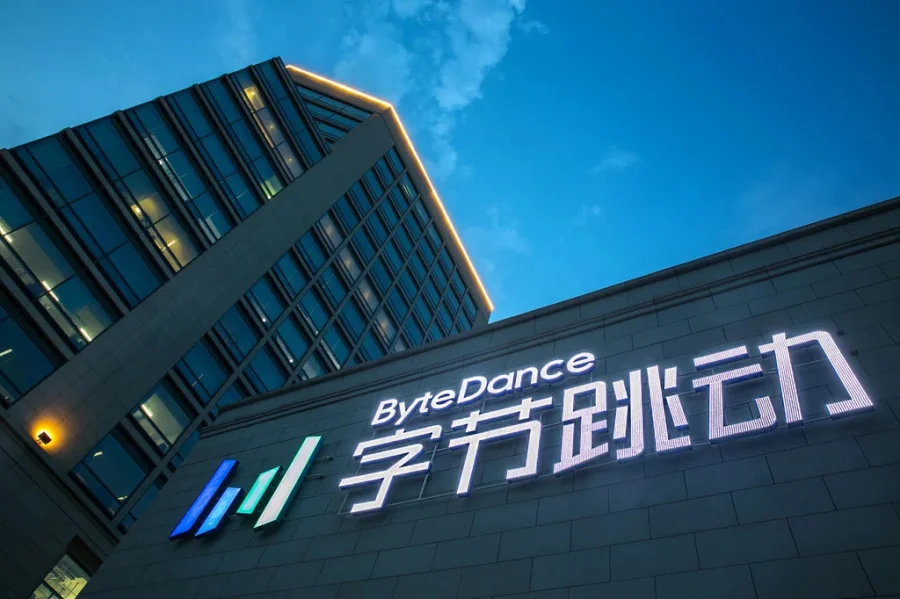
TikTok Owner ByteDance Develops Autonomous AI Agent to Rival OpenAI and Anthropic

Table of Contents:
Strategic Pivot Toward Next-Generation AI Agents
Chinese technology giant ByteDance, best known globally as the parent company of short-form video platform TikTok, is actively developing a next-generation artificial intelligence agent designed to directly challenge leading American AI laboratories, including OpenAI and Anthropic. According to internal assessments shared by company co-founder Zhang Yiming, bridging the technological gap and achieving parity with top-tier Western models could require several years of sustained research, capital allocation, and engineering iteration.
Zhang Yiming outlined this strategic roadmap during a closed-door internal briefing with ByteDance’s core research and development teams. Industry insiders indicate that the upcoming product will feature autonomous, context-aware capabilities comparable to Muse, the flagship AI assistant unveiled by Meta in September 2026. Unlike conventional text-based chatbots that merely answer prompts, modern AI agents are engineered to execute multi-step workflows, manage digital calendars, synthesize real-time visual data, and interact proactively across applications.
The Hardware Integration Question and Ecosystem Advantage
Meta has already moved aggressively to embed Muse across its consumer hardware ecosystem, most notably within its line of AI-powered smart glasses, while simultaneously preparing a standalone compact wearable device dedicated to seamless voice and visual interaction with the assistant. Whether ByteDance intends to manufacture proprietary consumer hardware to accompany its upcoming AI agent remains officially unconfirmed. However, analysts point out that ByteDance possesses an unmatched software distribution advantage: its flagship applications, TikTok and Douyin, collectively engage more than 1.7 billion monthly active users worldwide, offering a massive built-in testing ground and distribution channel for consumer-facing AI tools.
Scaling Seed AI Models and Overcoming Data Bottlenecks
A primary technical hurdle facing ByteDance’s engineering division is upgrading the foundational architecture of its proprietary language models. According to industry reporting from Bloomberg, ByteDance’s Seed AI family of models has historically been trained on smaller, less diverse datasets compared to the frontier models maintained by OpenAI, Anthropic, and Google. To close this performance gap, the company has shifted significant engineering focus toward expanding, curating, and refining its proprietary training datasets, alongside optimizing reinforcement learning pipelines to improve reasoning accuracy and reduce hallucinations.
Unprecedented Capital Expenditure in Global AI Infrastructure
Competing at the frontier of artificial intelligence requires colossal computing power, and ByteDance is preparing to match the historic capital expenditures of Silicon Valley hyperscalers. Market intelligence indicates that ByteDance is evaluating plans to allocate up to $70 billion throughout 2026 toward constructing high-density data centers, securing advanced AI accelerators, and expanding global cloud infrastructure.
To put this figure into broader market perspective, global enterprise and hyperscaler spending on AI infrastructure is projected to surpass $300 billion annually by the end of 2026, while the specialized market for autonomous AI agents is forecast to grow at a compound annual growth rate (CAGR) exceeding 40 percent through 2030. By committing tens of billions of dollars to compute capacity and foundational model research, ByteDance aims to transform itself from a dominant social media powerhouse into a premier global artificial intelligence contender.
Leave a Comment
Comments
No comments yet. Be the first to comment!
You may also like

Trump signed a key agreement transferring TikTok to US control
26-09-2025
Rating: 0 | Views: 2406 | Reading time: 3 min
Read →
Telegram Ads launches new placement — advertising inside bots
14-05-2025
Rating: 0 | Views: 2956 | Reading time: 2 min
Read →
YouTube Introduces an Isolation Filter: How to Remove Shorts from Search
09-01-2026
Rating: 0 | Views: 2012 | Reading time: 3 min
Read →
British Law Changes Social Media. Why Are X and Reddit Blocking Posts About War?
04-08-2025
Rating: 0 | Views: 3888 | Reading time: 2 min
Read →
Scam Telegram bots: what are the dangers and how to protect yourself
27-06-2025
Rating: 0 | Views: 4075 | Reading time: 1 min
Read →